Blog / Comparisons

2026 Lexus UX vs. Kia Telluride: Which One Fits Your Lifestyle?

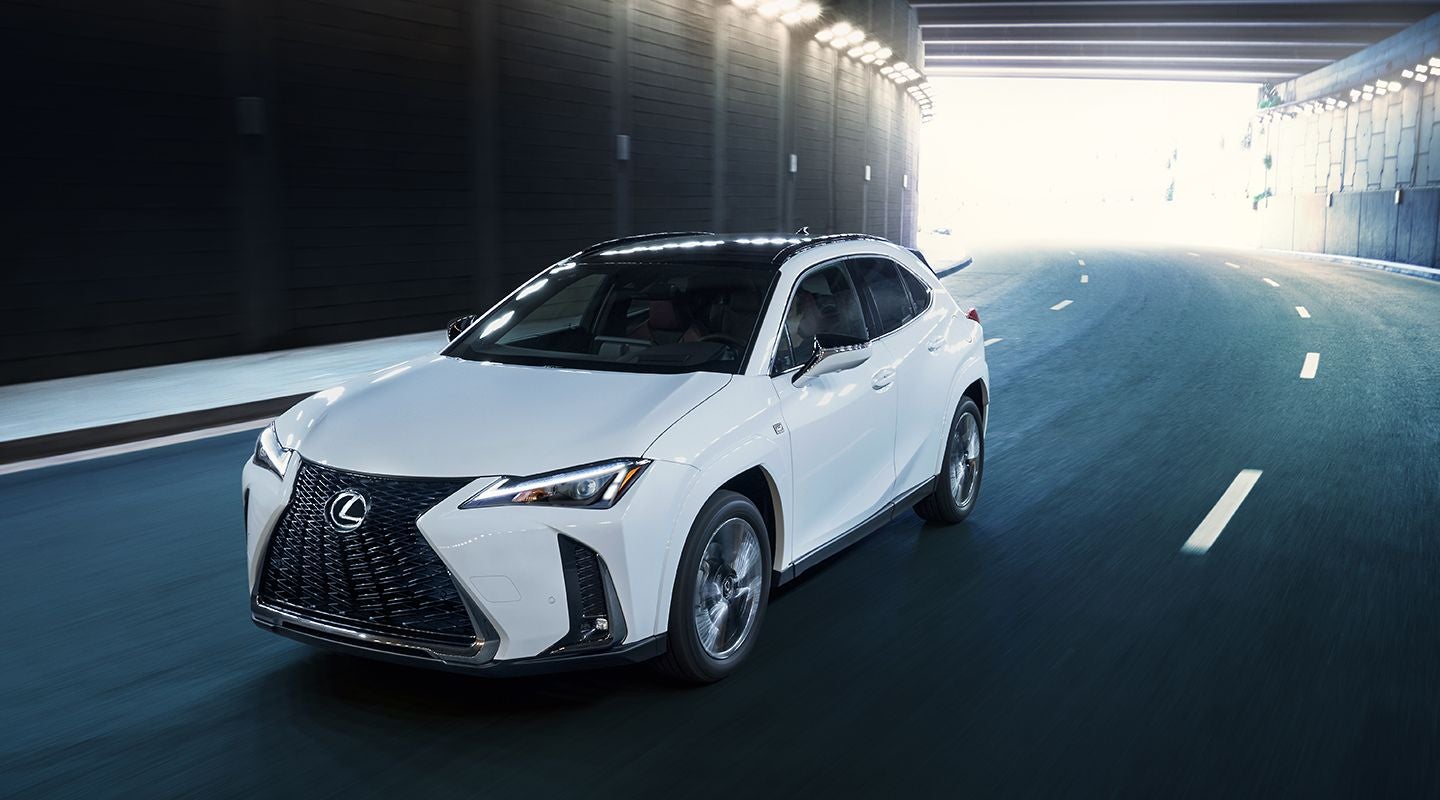
White Lexus UX

Choosing a new vehicle often comes down to a simple question: what does your daily life actually look like? For Southern California shoppers cross-shopping the 2026 Lexus UX vs Kia Telluride, that question shapes the whole decision more than any spec sheet could. One is a compact luxury hybrid built for city streets and highway commutes. The other is a three-row family hauler built for hauling gear, kids, and everything in between.

If you're ready to see what the UX lineup offers, you can explore current UX inventory at Longo Lexus while we walk through the details.

2026 Lexus UX vs. Kia Telluride: Two Different Paths

These two vehicles were built with different buyers in mind from the start. Lexus designed the UX around agility and a cabin that feels upscale for drivers dealing with dense traffic and tight parking. Kia built the Telluride to serve larger households that need three rows of seating and real cargo capacity. Framed this way, the Kia vs Lexus debate comes down to which one matches how you actually live day to day. Understanding that distinction from the start makes the rest of this comparison much easier to apply to your own situation.

2027 Kia Telluride: A Look at the Three-Row Family Hauler

Kia's Telluride has built a reputation as a family SUV that gets used hard, and the 2027 model continues that approach with seven or eight-seat configurations depending on trim.

Space and Seating Versatility

The Telluride's interior is its calling card. With seating for up to eight and flexible second- and third-row arrangements, it's designed for families who need to move people and cargo at the same time. Cargo volume behind the third row sits at 22.3 cubic feet, and that number grows to 89.3 cubic feet once you fold the seats flat, plenty of room for strollers, sports gear, or a Costco run without much compromise.

Rugged Capability for Families on the Go

The standard Telluride engine is a 2.5-liter turbocharged four-cylinder producing 274 hp and 311 lb.-ft. of torque, with towing capacity up to 5,000 pounds. A turbo-hybrid variant is also available, delivering 329 hp and 339 lb.-ft. of torque with a slightly lower 4,500-pound towing capacity. Fuel economy on the standard engine lands around 20 mpg combined, while the hybrid EX trim reaches an EPA-estimated 35 mpg combined in FWD form.

For families hauling trailers or bikes to the mountains on weekends, that towing figure matters a lot, even if it means paying for it at the pump the rest of the week.

2026 Lexus UX: Crafted for the Modern Urban Driver

If the Telluride is built around volume, the UX is built around precision. Lexus designed this compact SUV for drivers who want a cabin that feels genuinely upscale, without the bulk of a three-row vehicle.

Refined Efficiency and Hybrid Performance

The 2026 Lexus UX 300h comes exclusively as a hybrid in the U.S., pairing a 2.0-liter Atkinson-cycle four-cylinder engine with dual motor-generators through a planetary CVT for up to 196 hp. EPA estimates land at 45 city / 41 highway / 43 combined MPG in FWD form, or 44/40/42 MPG with AWD. For a daily commuter making the drive from El Monte into downtown, or up along the 210, that kind of efficiency adds up fast, both at the pump and in reduced maintenance demands over time.

Premium Craftsmanship and Cabin Technology

Step inside, and the difference in philosophy becomes obvious. NuLuxe seating comes standard across all eight UX trims, and an 8-inch touchscreen is standard equipment, upgraded to a 12.3-inch display on the F SPORT Handling trim. Wireless Apple CarPlay and Android Auto are standard as well. Move up to Premium trim and you'll find heated and ventilated front seats, a 12.0-inch digital instrument cluster, a hands-free liftgate, and a sunroof. Buyers who want a true audiophile experience should look at the available Mark Levinson 13-speaker sound system, a feature you simply won't find anywhere on the Telluride's tech list.

Agile Handling for City and Beyond

At 177.0 inches long with a best-in-class 17.1-foot turning radius, the UX is engineered to feel nimble in exactly the situations where larger SUVs struggle: tight parking structures, narrow side streets, and congested surface roads throughout Southern California. That same agility carries over to weekend drives up into the San Gabriel Mountains or out toward the coast, where the UX's composed handling makes twisty roads genuinely enjoyable rather than something to endure.

Comparing Efficiency, Value, and Ownership Costs

Efficiency is where the 2026 Lexus UX vs Kia Telluride comparison starts to separate clearly. The UX 300h's 43 combined MPG rating outpaces even the Telluride's hybrid variant, and it does so with a smaller footprint that's easier to live with day to day. Warranty coverage also favors long-term peace of mind differently between the two brands: Lexus backs the UX with a 4-year/50,000-mile basic warranty, a 6-year/70,000-mile powertrain warranty, and an 8-year/100,000-mile warranty on hybrid components. Kia's warranty structure leans toward a longer 10-year/100,000-mile powertrain warranty and a 5-year/60,000-mile basic warranty.

Where the UX pulls ahead is in day-to-day running costs. Better fuel economy translates directly into fewer fill-ups, and Lexus ownership includes access to Longo Lexus's service support, including Lexus-certified technicians and amenities like complimentary flatbed pick-up and delivery.

Both vehicles are offered in FWD or AWD configurations. Here's how the rest of the specs stack up on paper:

Spec 2026 Lexus UX 300h 2027 Kia Telluride
Engine/Powertrain 2.0L Atkinson-cycle hybrid 2.5L turbo (hybrid available)
Transmission Planetary CVT 8-speed automatic
Horsepower/Torque Up to 196 hp 274 hp / 311 lb.-ft. (329 hp / 339 lb.-ft. hybrid)
Fuel Economy Up to 45 city / 41 hwy / 43 combined MPG Up to 22 mpg combined (35 combined hybrid EX FWD)
Cargo Volume 17.2 cu.-ft. 22.3 / 48.7 / 89.3 cu.-ft.
Seating Capacity 5 7 or 8 (trim-dependent)

Comparing Technology and Everyday Comfort

Both vehicles come well-equipped with modern tech, but the emphasis differs. The Telluride offers a 12.3-inch touchscreen, wireless CarPlay and Android Auto, and a comprehensive suite of standard driver-assistance features aimed at family-focused convenience and safety. The UX counters with Lexus Safety System+ 3.0 standard across every single trim, including Pre-Collision assist with pedestrian detection, Dynamic Radar Cruise Control, Lane Departure Alert with steering assist, Lane Tracing Assist, Road Sign Assist, and automatic high beams.

On safety ratings, the UX holds a five-star overall NHTSA rating (five-star side, four-star frontal and rollover), along with Good ratings from IIHS in small overlap front and headlight testing, plus a Good+ rating for LATCH ease-of-use. The Telluride's prior generation held a 5-star NHTSA rating. If you're browsing options now, you can browse the new UX lineup to see these safety features in person.

Which Vehicle Truly Fits Your Lifestyle?

Choose the Telluride if your household regularly needs three rows of seating, you're hauling a trailer or boat on weekends, or maximum cargo space is non-negotiable for your family's routine. It's a genuinely capable vehicle for those specific needs, and Kia has built it with that family-first mission in mind.

The UX makes more sense if you're commuting solo or as a couple, dealing with tight city streets and parking structures on a regular basis, and want better fuel economy, a more refined cabin, and standard advanced safety tech that doesn't require stepping up to a higher trim. Small families who don't need a third row will also find the UX's blend of efficiency and everyday agility hard to beat for daily driving around El Monte and the greater Southern California region.

When you weigh long-term ownership costs against maneuverability and how much luxury tech comes standard, the UX looks like the smarter fit for most urban and suburban drivers.

Experience the 2026 Lexus UX at Longo Lexus

Specs and comparisons only tell part of the story. The best way to understand how the UX's turning radius, hybrid efficiency, and NuLuxe interior actually feel is to get behind the wheel yourself.

Schedule Your Visit

Our team at Longo Lexus, one of the original Lexus dealerships since 1989 and the top Lexus retailer for new vehicle sales in the Western United States since 1990, can walk you through every trim and answer questions specific to your driving habits.

Ready to see the 2026 UX in person? Schedule a test drive with our team today and find out firsthand why it might be the right fit for your lifestyle.
Posted in:

Related Posts

Lexus RZ

2026 Lexus RZ vs. 2026 Toyota bZ: Which Electric Model Fits Your Drive?

Two electric SUVs, same parent company, same underlying platform, wildly different personalities. The 2026 Lexus RZ and 2026 Toyota bZ were built for different kinds of drivers, even though they share plenty of DNA under the skin. The RZ chases refinement and makes every mile feel deliberate. The bZ just wants to get you where you're going without fuss or unnecessary cost. This 2026 Lexus RZ vs. 2026 Toyota bZ comparison walks through where each one pulls ahead, so you land on the vehicle that actually fits your life instead of whichever one happens to be sitting closer on the lot. 2026 Lexus RZ vs. 2026 Toyota bZ: Two Electric Paths Forward Toyota and Lexus share the same electric platform, but the RZ and bZ use it in different ways. The RZ treats electric driving as an extension of the Lexus philosophy, with every touchpoint polished so the experience feels special rather than just efficient. The 550e F Sport trim puts up to 402 hp on tap. The bZ takes the more grounded route, banking on efficiency and value to deliver dependable electric transportation, topping out at 338 hp in its dual-motor AWD setup. Worth noting: Toyota dropped the "4X" and renamed this model from the bZ4X to simply the bZ for 2026, though the engineering underneath carries over unchanged. Both vehicles support the same electrification push from their parent brand, just filtered through different priorities. Both are also available locally, the RZ at Longo Lexus and the bZ at sister store Longo Toyota. 2026 Lexus RZ: Premium Comfort Meets Electric Innovation The Lexus RZ is a considered take on what luxury driving should feel like in an all-electric era. Open the door and that intention hits you right away, in how the switches feel, how the seats greet you, how quiet the world suddenly becomes. Distinctive Design and Interior Craftsmanship The RZ carries Lexus's spindle-inspired design language, shaped into a coupe-like, aerodynamic SUV profile. Inside, ambient lighting and a 14.0-inch touchscreen running Lexus Interface anchor the cabin, with Ultrasuede-trimmed seating on Luxury and F Sport grades and NuLuxe on Standard and Premium. The 10-inch Head-Up Display, Advanced Park with Remote Park, and Digital Key are available on Premium and F Sport and standard on Luxury, so the trim you pick determines how much of that tech comes along. Noise insulation stands out here; Lexus engineered the cabin so the silence of electric driving feels serene instead of hollow. Performance, Range, and Technology Highlights Lexus builds the RZ around three powertrains. The 350e runs front-wheel drive with 221 hp, up to 301 miles of range on 18-inch wheels, 126 MPGe, and a 7.1-second 0-60 mph time. The 450e adds DIRECT4 all-wheel drive and 308 hp, with up to 264 miles of range on 18s and a 4.9-second 0-60. The 550e F Sport tops the lineup at 402 hp, hits 0-60 mph in 4.1 seconds, and delivers 229 miles of range at 95 MPGe. The 350e and 450e share a 74.69 kWh battery, while the 550e gets a larger 76.96 kWh pack. All three use a NACS port with 150 kW DC fast charging, good for 10 to 80 percent in about 30 minutes, plus an 11 kW onboard charger for home Level 2 charging. Drive Connect with cloud navigation and paddle-adjustable regenerative braking round out the tech package, and the F Sport adds M Mode with virtual eight-speed shifting. 2026 Toyota bZ: Efficient, Accessible Electric Driving Toyota built the bZ around a simple question: what does a practical, everyday electric SUV look like when value and usability come first? The answer earns its spot in the garage through reliability and efficiency, not luxury trimmings. Streamlined Design and Everyday Practicality The bZ's exterior is compact and boxy at 184.6 inches long with a 112.2-inch wheelbase, shaped by function and well-suited to city driving. Fabric and SofTex-trimmed seating on XLE grades, full SofTex on Limited, and a 14-inch Toyota Audio Multimedia touchscreen keep the cabin straightforward, with wireless Apple CarPlay and Android Auto standard across the lineup. Nothing about the layout feels overbuilt, and for drivers who just want to get in, drive, and arrive without drama, that's exactly the point. Performance, Range, and Technology Highlights The bZ offers single-motor FWD in two outputs, 168 hp on the base XLE FWD and 221 hp with the larger battery, or a dual-motor AWD version with 338 hp and a 4.9-second 0-60 mph time. FWD models cover the same sprint in 8.0 seconds. Range runs from 236 miles on the base XLE FWD up to 314 miles on the XLE FWD Plus, which also carries the highest combined rating at 131 MPGe. The base XLE FWD uses a 57.7 kWh battery; every other configuration steps up to 74.7 kWh. All trims get 150 kW DC fast charging, good for a 10 to 80 percent charge in roughly 30 minutes, plus an 11 kW onboard charger for home Level 2 charging. Toyota Safety Sense 3.0 covers Pre-Collision, Lane Tracing Assist, and Full-Speed Range Dynamic Radar Cruise Control, and paddle shifters let you dial regenerative braking through four levels. Range, Charging, and Efficiency Both vehicles rely on 150 kW fast charging and both now use a native NACS port, which means direct access to Tesla Superchargers without an adapter. Either one gets from 10 to 80 percent in roughly 30 minutes. On range, the RZ 350e covers 301 miles on 18-inch wheels and 284 on 20s, the 450e drops to 264 and 257, and the 550e F Sport sits at 229 with its larger 76.96 kWh pack. The bZ splits by battery: the base XLE FWD runs a 57.7 kWh pack good for 236 miles, while every other trim steps up to 74.7 kWh, reaching 314 miles in XLE FWD Plus form, 299 for Limited FWD, 288 for XLE AWD, and 278 for Limited AWD. Maximum range goes to the bZ, but only if you step past the entry trim. The base XLE FWD falls short of every RZ except the 550e. Performance and Driving Dynamics Compared Trim Drivetrain Horsepower 0-60 mph RZ 350e FWD 221 hp 7.1 sec RZ 450e AWD (DIRECT4) 308 hp 4.9 sec RZ 550e F Sport AWD (DIRECT4) 402 hp 4.1 sec bZ XLE FWD FWD 168 hp 8.0 sec bZ XLE FWD Plus / Limited FWD FWD 221 hp 8.0 sec bZ XLE AWD / Limited AWD AWD 338 hp 4.9 sec Behind the wheel, these feel like two different vehicles entirely. The RZ, especially in 550e F Sport trim, drives with responsive steering and composed handling that rewards an attentive driver without demanding one. The bZ goes for smooth, predictable dynamics built for daily driving and city traffic. Its dual-motor AWD variant is genuinely quick, matching the RZ 450e's 4.9-second 0-60 with 30 more horsepower, though the tuning stays relaxed rather than eager. Straight-line speed is not where these two separate. Drivers who care about steering feel, chassis composure, and the F Sport's M Mode will find the RZ keeps giving something back; drivers who want the acceleration without the price of admission will find the bZ AWD delivers most of it. Which Electric SUV Fits Your Lifestyle? Matching the right vehicle to the right driver takes a bit of honest self-assessment. Both the RZ and the bZ excel in their own lane, they just answer different needs. The RZ Driver: Seeking Luxury and Refinement The RZ driver cares about the quality of the experience as much as the destination itself. They notice a cabin that stays quiet on the freeway, materials that feel deliberately chosen, and technology like Lexus Interface and Drive Connect that enhances the drive rather than interrupting it. This buyer also values the broader ownership experience, including Lexus-certified service and the reliability Lexus has built its name on. If that sounds like you, it's worth browsing the current RZ lineup at Longo Lexus to see which trim and powertrain fit best. The bZ Driver: Seeking Value and Simplicity The bZ driver wants a capable, honest electric vehicle without paying for features they'll never use. Many are making their first move into electric driving and want something approachable. Strong range, intuitive tech like Toyota Safety Sense 3.0, and a lower starting price matter more here than badge prestige. This driver trusts Toyota's reliability record and wants that same dependability carried into an EV, whether they're navigating SoCal freeways or local El Monte streets. Experience Both Models: Visit Longo Lexus or Longo Toyota Reading about these vehicles only gets you so far. The real comparison happens once you're behind the wheel, when the differences in cabin quality, driving feel, and tech integration become obvious almost immediately. Visit Longo Lexus for the RZ Longo Lexus, located at 3530 Peck Rd in El Monte, CA, has been the number-one Lexus retailer for new vehicle sales in the Western United States since 1990 and has held Elite of Lexus status since 1992. Our team can walk you through the full 2026 RZ lineup, talk through trim options, and help you land on the configuration that fits how you drive. Reach the sales team at 626-539-2955, browse the full RZ inventory online, or contact them directly to set up a time. Sales hours run Monday through Saturday from 9 AM to 8 PM and Sunday from 10 AM to 7 PM. Visit Longo Toyota for the bZ If the bZ looks like the better fit, our sister store Longo Toyota offers that same level of attention and expertise just next door. Visiting both dealerships in the same trip gives you the clearest possible read on which electric SUV suits you. Whether you drive off in an RZ or a bZ, you'll leave knowing exactly why you chose it.

2026 Lexus TX vs. 2026 Lexus LX

2026 Lexus TX vs. 2026 Lexus LX: Two Exceptional SUVs, One Showroom

Choosing between the 2026 Lexus TX and the 2026 Lexus LX is one of the more genuinely interesting decisions a luxury SUV buyer can face. Both carry the full weight of the Lexus promise: precise engineering and premium materials, right down to the last detail. They serve different purposes, though, and knowing what each one is actually built for makes finding the right fit a lot easier. We carry both at Longo Lexus, and we want to help you make that call with confidence. more What Sets the 2026 Lexus TX and LX Apart And Why Both Are Worth Your Attention The clearest way to frame this comparison is straightforward: the TX is built for modern family life, while the LX is built to command. The TX leans into electrification, three-row flexibility, and everyday practicality. The LX answers a completely different call, with a twin-turbo V6, body-on-frame construction, and a presence that draws attention on the freeway and holds its own on terrain that's anything but paved. Both models represent distinct ideas about what a luxury SUV should be. If you've been asking yourself whether Lexus makes a three-row SUV or a full-size SUV, the answer to both is yes, and both live in the same showroom. 2026 Lexus TX vs. 2026 Lexus LX: Key Highlights at a Glance Below is a side-by-side look at what defines each model. You can also explore our new Lexus inventory to see current availability on both. Feature 2026 Lexus TX 2026 Lexus LX Core Personality Electrified three-row family SUV Body-on-frame flagship SUV Powertrain Range Turbocharged four-cylinder, hybrid, or plug-in hybrid Twin-turbo V6 or hybrid powertrain Trim Character TX 350 (Standard, Premium, Luxury, F SPORT Handling), TX 500h F SPORT Performance, TX 550h+ Luxury Premium, F SPORT Handling, Luxury, Overtrail, Ultra Luxury Drivetrain FWD or AWD depending on trim Four-wheel drive standard Main Appeal Three-row seating, electrified options, cargo space Power and capability at flagship scale Meet the 2026 Lexus TX: A Stylish, Electrified Three-Row SUV Built for Modern Life The 2026 Lexus TX is what you get when a luxury family SUV is designed without cutting corners. It seats six or seven passengers across three rows, offers more cargo room than the LX, and gives buyers a genuine choice of powertrains: turbocharged gasoline, hybrid, or plug-in hybrid. For families working through San Gabriel Valley school runs and Southern California weekend trips, the TX has the kind of flexibility that real life actually demands. TX 350: Turbocharged Performance and Everyday Refinement The TX 350 uses a 2.4-liter turbocharged four-cylinder engine with 275 horsepower and 317 lb-ft of torque. It's the accessible entry point into the TX lineup, and it doesn't feel like one. The turbocharged output gives it genuine punch, and the cabin reflects the premium quality Lexus is known for. It's available in FWD or AWD, depending on preference. TX 500h F SPORT Performance: Sport-Tuned Hybrid Thrills The TX 500h F SPORT Performance is built for drivers who want luxury without giving up a spirited feel behind the wheel. Its hybrid powertrain produces 366 total system horsepower and 406 lb-ft of torque, giving it a noticeable edge in responsiveness over the base trim. The F SPORT Performance package adds sport-tuned suspension and a more aggressive exterior look, making this one of the more exciting TX configurations. It's the trim that appeals to enthusiasts who still care about how the car drives. TX 550h+ Luxury AWD: Plug-In Hybrid Luxury With Impressive Range The TX 550h+ Luxury AWD sits at the top of the TX lineup with a plug-in hybrid powertrain for buyers who want the option to run on electric power for shorter daily trips. AWD comes standard here, and the whole package is aimed at buyers who want the most refined, forward-thinking version of the TX. It blends long-range capability with daily efficiency in a way that genuinely sets the TX apart within the broader Lexus lineup. Meet the 2026 Lexus LX: Body-on-Frame Capability With Flagship-Level Luxury Where the TX earns its reputation through versatility, the 2026 Lexus LX earns it through presence. This is a full-size SUV built on a body-on-frame platform, a construction approach that separates it structurally from crossover-based luxury vehicles. That foundation delivers a solidity and sense of capability that's immediately apparent from the driver's seat. Paired with a twin-turbo V6 producing 409 horsepower and 479 lb-ft of torque on the LX 600, or a hybrid powertrain producing 457 net combined horsepower and 583 lb-ft of torque on the LX 700h, the LX delivers flagship-level performance. If you're looking for the biggest, most capable vehicle in the Lexus lineup, the LX is your answer. The LX is available as the LX 700h Performance Hybrid, which delivers even greater performance than the twin-turbo V6. LX Trim Range: Premium Through Ultra Luxury The 2026 Lexus LX comes in five trim levels: Premium, F SPORT Handling, Luxury, Overtrail, and Ultra Luxury. That range matters in practice. The Premium gets you into a genuinely well-equipped LX, while the Ultra Luxury delivers the most opulent interior Lexus offers. Each step up adds refinement and features while maintaining four-wheel drive across all trims and choosing between the twin-turbo V6 and hybrid powertrains. F SPORT Handling and Overtrail: Adventure-Ready Versatility Two trims deserve particular attention for buyers with adventurous intentions. The F SPORT Handling sharpens the LX's dynamics without sacrificing its flagship character. The Overtrail takes the LX's body-on-frame toughness and orients it toward more demanding terrain. Both remain unmistakably luxurious; the difference is in how that capability is calibrated for different kinds of driving. Performance and Powertrain: Twin-Turbo V6 vs. Hybrid and Plug-In Options On the powertrain side, the gap between the TX and LX reflects their different priorities. The LX is available with a twin-turbo V6 delivering 409 hp and 479 lb-ft of torque on the LX 600, or as the LX 700h Performance Hybrid producing 457 net combined horsepower and 583 lb-ft of torque. Four-wheel drive comes standard across every trim. That consistency gives the LX a clear, focused identity. The TX takes a different approach. The TX 350 offers 275 hp and 317 lb-ft of torque from its 2.4-liter turbocharged four-cylinder, strong numbers for daily driving that give it enough punch to feel genuinely quick. Move up to the TX 500h F SPORT Performance, and the hybrid system delivers 366 total system horsepower and 406 lb-ft of torque, making it feel more athletic without adding complexity at the pump. The TX 550h+ Luxury AWD then layers in plug-in capability for the buyer who wants maximum efficiency alongside the luxury experience. On pure performance numbers, the LX offers competitive power across both available drivetrains, with the LX 700h hybrid delivering 457 net combined horsepower and 583 lb-ft of torque versus the LX 600's 409 hp and 479 lb-ft. The TX's powertrain variety, though, means buyers can pick an experience tuned specifically to how they drive. Choosing Between the 2026 Lexus TX and LX: Which SUV Fits Your Life? The TX vs. LX decision comes down to what you're actually asking your SUV to do day to day. The TX is the stronger fit if you need seating for six or seven passengers in a refined three-row layout, want electrified powertrain options including a plug-in hybrid for shorter electric-only trips, or prioritize cargo flexibility and family-friendly practicality on daily commutes and weekend trips. The ability to choose between FWD and AWD also gives TX buyers more flexibility based on their driving needs. The LX makes more sense if you want commanding performance from the Lexus SUV lineup, with the LX 600's twin-turbo V6 producing 409 hp and 479 lb-ft of torque or the LX 700h hybrid system producing 457 net combined horsepower and 583 lb-ft of torque,, value body-on-frame construction and the solidity that comes with it, or are drawn to a trim range that extends all the way to Ultra Luxury. Four-wheel drive comes standard on every LX configuration, with no exceptions. Both models are genuinely exceptional. The TX offers more usable cargo space, while the LX's body-on-frame build delivers a different kind of road presence. For the right buyer, neither is a compromise. Experience Both Models at Longo Lexus We've been part of the Lexus story since the very beginning, and we take pride in offering both the 2026 Lexus TX and the 2026 Lexus LX to buyers across the San Gabriel Valley and beyond. Our team at Longo Lexus in El Monte is here to walk you through every trim level, powertrain option, and configuration so you leave with the vehicle that's actually right for you. Whether the TX's plug-in hybrid powertrain is what caught your attention or the LX's twin-turbo presence is what you've been looking for, a hands-on experience makes all the difference. Stop by our El Monte showroom, or get in touch with us to schedule a time that works. We're open Monday through Saturday from 9 AM to 8 PM, and Sundays from 10 AM to 7 PM. The 2026 Lexus TX vs. 2026 Lexus LX comparison looks great on paper; it looks even better in person.

2026 Lexus NX vs. 2026 Toyota RAV4

2026 Lexus NX vs. 2026 Toyota RAV4: How Do They Compare?

People ask all the time which Lexus compares to the RAV4, and the honest answer is the NX. Both SUVs share Toyota's engineering DNA, but they serve very different buyers. The RAV4 is one of America's most popular compact SUVs, built around practicality, efficiency, and accessibility. The NX is its luxury counterpart, trading some cargo space and sticker-price value for a more refined, feature-rich driving experience. If you're weighing the 2026 Lexus NX against the 2026 Toyota RAV4, here's what you actually need to know. more 2026 Lexus NX vs. 2026 Toyota RAV4: Key Differences at a Glance These two SUVs may share a parent company, but they occupy noticeably different spaces in the market. The NX offers powertrain variety and interior luxury across three configurations. The 2026 RAV4, by contrast, has moved to an all-hybrid lineup, putting fuel economy and electrification at the center of its identity. Category 2026 Lexus NX 2026 Toyota RAV4 Powertrain Options Gas (NX 350: 2.4L turbo I-4, 275 hp, 317 lb-ft), Hybrid (NX 350h: 2.5L I-4, 240 hp), PHEV (NX 450h+: 2.5L I-4, 304 hp) All hybrid or PHEV (2.5L hybrid I-4: 226–236 hp; PHEV: 2.5L I-4, 324 hp) Best Combined MPG 40 MPG (NX 350h FWD) 44 MPG (Hybrid FWD) Cargo (Behind Rear Seats) ~22.7 cu ft ~37.8 cu ft Towing Capacity (Max) 2,000 lbs 3,500 lbs Infotainment Screen Up to 14-inch touchscreen Up to 12.9-inch touchscreen EV Range (PHEV) 37 miles (NX 450h+) 52 miles (RAV4 PHEV) Interior quality tells a big part of the story here. The NX uses premium materials throughout the cabin, while the RAV4 keeps things functional with synthetic materials that hold up well for families. Safety tech differs in a meaningful way too: the NX brings more advanced driver assistance features at lower trim levels, while the RAV4 tends to reserve some of those for pricier configurations. Powertrain Options: Gas, Hybrid, and Plug-In Hybrid Compared Powertrain choice is one of the clearest ways to understand what separates these two. The RAV4 has fully committed to hybrid technology for 2026, dropping the gas-only variant entirely. The NX takes a different approach, offering three distinct paths. 2026 Toyota RAV4 Powertrains: All-Hybrid Lineup Every 2026 RAV4 pairs a 2.5L four-cylinder with an electric motor via eCVT. The standard hybrid produces 226 hp in FWD configuration or 236 hp with AWD, the AWD system adding a rear motor. For buyers wanting extended electric capability, the RAV4 PHEV delivers 324 hp and 52 miles of EV range. Towing capacity ranges from 1,750 to 3,500 lbs depending on trim, and the standard hybrid reaches 60 mph in about 7.1 seconds. 2026 Lexus NX Powertrains: Gas, Hybrid, and PHEV Options The NX 350 uses a turbocharged 2.4L four-cylinder producing 275 hp and 317 lb-ft of torque through an eight-speed automatic, hitting 60 mph in 6.6 seconds. The NX 350h hybrid pairs a 2.5L four-cylinder with an eCVT for a combined 240 hp. At the top sits the NX 450h+ PHEV at 304 hp with 37 miles of EV range. All NX trims are rated at 2,000 lbs towing capacity. The range of choices here genuinely accommodates drivers with different priorities. Fuel Economy: Which SUV Is More Efficient? On pure fuel economy, the RAV4 hybrid holds the edge. The RAV4 Hybrid FWD achieves 48 city / 42 highway / 44 combined MPG. The NX 350h FWD returns 40 combined MPG. That four-MPG gap in combined figures is consistent across FWD configurations and narrows somewhat with AWD on both models. For Southern California drivers logging daily miles on I-10 or grinding through stop-and-go LA commutes, that efficiency advantage adds up to real savings over time. The NX 350 (gas only) rates 21 city / 28 highway MPG and requires premium fuel, which widens the cost-per-mile gap further. That said, the NX 450h+ changes the calculus for drivers who can charge regularly. Its 37 miles of EV range covers most local commutes without burning a drop of gas. The RAV4 PHEV pushes that advantage even further with 52 miles of EV range, rated at up to 40 MPG combined on gasoline. Interior Space and Cargo Room: How They Stack Up The RAV4 is the larger vehicle in practical terms, and the size difference shows up most clearly in cargo volume. Passenger Space and Comfort The RAV4 offers more rear legroom and a wider cabin, which matters for families or anyone regularly hauling adult passengers. Its ground clearance matches the NX at 8.1 inches, but its lighter curb weight (roughly 3,594 lbs for the LE hybrid versus about 3,945 lbs for the NX 350h) contributes to a more agile feel in tight spaces. The RAV4's turning circle of 36.9 feet is also slightly tighter than the NX's 38.0 feet. The NX counters with a more polished passenger experience. Front seats are well-bolstered, cabin materials are a clear step up from the RAV4's cloth and SofTex surfaces on comparable trims, and the NX cabin is specifically tuned to cut road and wind noise. If rear-seat space is the priority, the RAV4 wins. If interior quality matters more, the NX makes a compelling case. Cargo Capacity and Everyday Usability The RAV4 offers up to 37.8 cu ft behind the rear seats. The NX provides 22.7 cu ft behind the rear seats and 46.9 cu ft folded. That gap is substantial and directly affects day-to-day usability when you're hauling gear, groceries, or larger family items. Buyers who need maximum cargo versatility will find the RAV4 far more accommodating. The NX does address its smaller footprint with a power liftgate and well-designed interior storage, but it does ask buyers to prioritize accordingly. Technology and Infotainment Features Tech is a genuine strength of the NX. The 2026 model comes standard with a 14-inch touchscreen, wireless Apple CarPlay and Android Auto, and a 12.3-inch digital gauge cluster on higher trims. Available features include a head-up display, Mark Levinson premium audio, and ambient lighting, and the system supports over-the-air updates. The RAV4 tops out at a 12.9-inch touchscreen on higher trims and includes a 12.3-inch digital cluster standard across all trims, which is actually an advantage at the base level. Wireless Apple CarPlay and Android Auto are available, along with Toyota Safety Sense 4.0 and an available digital rearview mirror. Over-the-air updates are supported here too. For tech-focused buyers, though, the NX's larger screen and available Mark Levinson audio deliver a noticeably more premium experience without needing to climb to a higher trim. Safety Ratings and Driver Assistance Technology Both SUVs come equipped with comprehensive driver assistance suites. The RAV4 is standard with Toyota Safety Sense 4.0, covering adaptive cruise control, lane tracing assist, automatic emergency braking, and pedestrian detection. Blind-spot monitoring and rear cross-traffic alert are standard across trims. The RAV4 is assembled in Canada or Japan depending on powertrain type. The NX comes standard with Lexus Safety System+ 3.0, a comparable suite that adds proactive driving assist and intersection support. Blind-spot monitoring and rear cross-traffic alert are standard here as well. The NX is assembled in Japan. Both vehicles are expected to earn five-star NHTSA overall ratings based on prior model data, and either one is a strong choice for safety-conscious buyers and families. Pricing, Value, and What Each SUV Delivers The 2026 RAV4 enters at a lower price point with an all-hybrid standard lineup, making it one of the most accessible compact SUVs on the market. Its combination of fuel efficiency, cargo space, towing capacity, and strong reliability represents excellent value for buyers focused on practicality and long-term ownership costs. The NX commands a premium, backed by real upgrades in materials quality, technology integration, powertrain variety, and overall cabin refinement. The NX 450h+ in particular makes a strong value argument for buyers seeking a plug-in luxury SUV with real-world efficiency and legitimate performance credentials. Which one is right for you comes down to which of those factors you weight most heavily. Which SUV Is Right for You? When customers ask us to help choose between these two, we start by asking what they prioritize daily. Here's how the data maps to actual buyer needs: Buyers prioritizing cargo flexibility, lower entry pricing, and maximum fuel efficiency will find the RAV4 a strong fit. Buyers prioritizing cabin refinement, a larger infotainment screen, and powertrain variety (including a turbocharged gas option) will find the NX more aligned with their expectations. Buyers focused on PHEV range should note that the RAV4 PHEV offers 52 miles of EV range versus 37 miles in the NX 450h+. Buyers focused on towing will find the RAV4's 3,500-lb maximum capacity significantly higher than the NX's 2,000-lb ceiling. If the NX sounds like the right fit, we invite you to browse our new Lexus inventory to see what's available. If the RAV4 is calling your name, we'd encourage you to explore the 2026 RAV4 at Longo Toyota, our sister store. Both vehicles are exceptional in their own right, and the best decision is always the one that matches how you actually drive.