

Welcome to friendly El Monte, where residents will greet you with a warm smile and a courteous welcome. Part of Los Angeles County, El Monte has a rich history, spanning its beginnings as a small farming community to its transformation into the lively, diverse city it’s become today. Whether you’re a lifelong local or a new visitor, it’s worth knowing some historical facts about this unique part of Southern California. Review this guide to learn a brief history of El Monte, California.
Origin of the El Monte Name
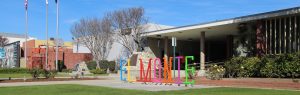
El Monte, CA
In the 18th and early 19th centuries, many Spanish soldiers and missionaries stopped along the banks of the San Gabriel River during the Portolá expedition, the first-known exploration of the area. They noted the thriving meadows between the San Gabriel and Rio Hondo rivers, home to willows, cattails, and wild grapevines. Taking the geography of the area into account, they named it “el monte,” an archaic Spanish word that means “wood” or “meadows.”
Later, pioneers chasing the promise of wealth during the California Gold Rush attempted to change the El Monte name. While residents at the time agreed, the name change never became official. In the 1850s, the California State Legislature designated the area as El Monte Township, later shortening it back to El Monte.
California Gold Rush
In the 1820s, El Monte became part of the Old Spanish Trail, a trade route extending from Santa Fe, New Mexico, to Southern California. In the late 1840s, thousands of people seeking gold used the Santa Fe and Old Spanish Trail routes to reach El Monte, which became known as the “End of the Santa Fe Trail.” While some only visited El Monte briefly before traveling elsewhere in the hopes of finding gold, other pioneers saw the potential in the area’s fertile land and decided to stay.
Many of El Monte’s first permanent residents were settlers from Texas, Arkansas, and Missouri, who built homesteads and began farming the land. The first El Monte residents established adobe brick dwellings and built a schoolhouse in the early 1850s, paving the way for El Monte to continue to grow and thrive throughout the 19th century. In 1870, the township of El Monte had a population of around 1,200 people. When Southern Pacific built a railroad depot in 1873, it spurred additional agricultural growth in the area.
Great Depression and World War II
After its incorporation in 1912, El Monte continued to attract settlers with its rich land, including fruit orchards and walnut fields. However, the Great Depression, an economic downturn in the 1930s, drastically altered the community of El Monte and others across the country. During the Depression-era, some residents chose to sublet tracts of farmland and find work elsewhere. El Monte became part of the New Deal’s resettlement program, which helped applicants find single-family housing. During this time, many people began arriving in El Monte as part of the Dust Bowl migration.
Shortly after the Great Depression, another defining event of the 20th century continued to bring changes to El Monte. World War II caused farming to decline as people found work in war-time factories. When the war ended, many people chose to move to El Monte and other areas of Southern California from across the country. Throughout the second half of the 20th century, El Monte continued to grow as the Los Angeles metropolitan area experienced substantial population increases.
El Monte Economy and Business
Agriculture has been a central part of El Monte’s economy since its beginnings, with farmers harvesting various fruit orchards, walnut groves, and vegetable fields. In the 20th century, the dairy industry began to prosper in El Monte, and Arden Farms, a dairy company, became a major employer in the area. Another company, Bodger Seed Ltd., grew flowering, seed-producing plants on large tracts of land, drawing thousands to see the fields when the flowers bloomed, earning the area the nickname “Las Flores.”
After World War II, many of the farms and dairies in El Monte shut down as new factories opened in town. As El Monte’s population continued to increase, the city built new schools and parks to support the growth. Throughout the second half of the 20th century, El Monte continued to transform into an urban city with a strong commercial and industrial economy.
Gay’s Lion Farm
A 1920s tourist attraction, Gay’s Lion Farm, is another notable chapter in El Monte’s economic history. Two former circus stars opened the attraction, which raised wild lions and other animals to perform acts for spectators. At one point, Gay’s Lion Farm had over 200 lions. Many of those animals starred in films in the 1920s and 1930s, and two of the lions even contributed to the Metro-Goldwyn-Mayer (MGM) logo, used to introduce the studio’s blockbuster films.
Gay’s Lion Farm closed in 1942 due to World War II rationing, and the lions were sent to public zoos. Although the farm never reopened, you can still see a life-size lion statue at the site of the former Gay’s Lion Farm at Peck Road and Valley Boulevard. Another lion statue sits in front of the El Monte High School with an inscription honoring the farm’s legacy.
El Monte Today
From its humble beginnings, El Monte has grown into a bustling, thriving city with plenty to offer. Located 12 miles outside of Los Angeles, El Monte is home to an ethnically diverse population of nearly 110,000 people. Due to its location at the intersection of Interstates 10 and 605, El Monte is a major hub of the San Gabriel Valley.
The city continues to attract new commercial and retail businesses. In addition to being the home of Longo Toyota and Longo Lexus, the city’s major businesses include Home Depot, Sam’s Club, Vons Distribution Warehouse, and the Wells Fargo Operations Center. New schools, parks, and amenities, such as a new aquatic center, continue to help El Monte grow. For all these reasons and more, El Monte is truly a special place to live and work.
Now you know more about the history of El Monte, California. At Longo Lexus, we’re proud to call El Monte home, and we serve customers across the San Gabriel Valley and Los Angeles communities. We believe in reinvesting in the community to help our customers, families, friends, and neighbors continue to grow and thrive well into the future. Learn more about our community outreach efforts and join us for one of our community events. For more information, send us a message or stop by our dealership. We look forward to welcoming you soon.
Connect with us


