Blog / Comparisons

2027 Lexus GX Overtrail vs. Luxury: Which GX 550 Trim Fits Your Lifestyle?

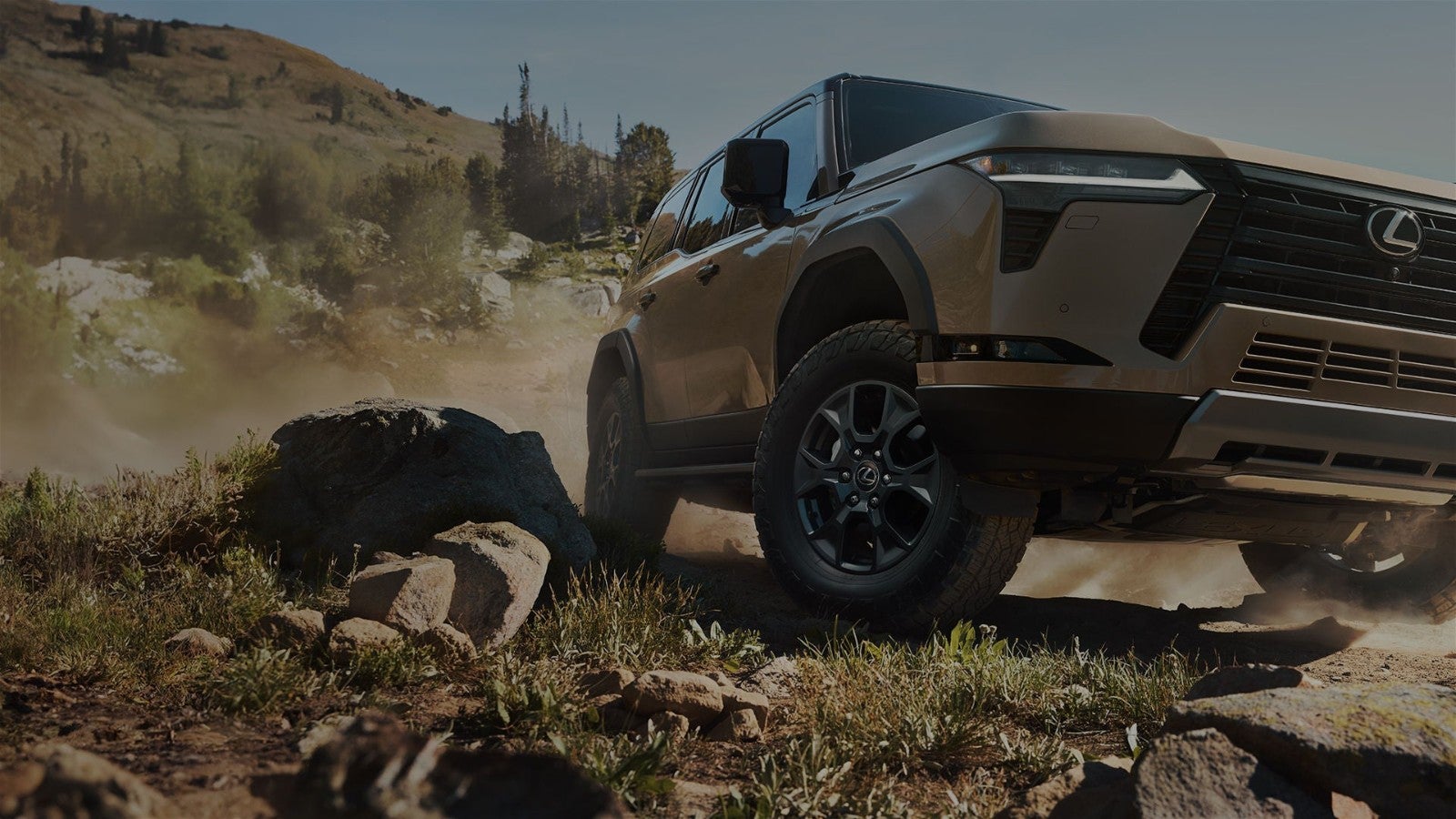
Lexus GX Overtrail kicking up dirt on a desert off-road trail

Picking between two GX 550 grades usually comes down to one question: how much of your week is trail, and how much is school runs and highway family road trips? The Lexus GX Overtrail vs Luxury decision is really about where each grade puts its equipment. Both share the same body-on-frame foundation, so you give up very little luxury or capability either way. The differences are below, and you can browse new Lexus GX inventory at Longo Lexus as you compare.

2027 Lexus GX Overtrail vs. Luxury at a Glance

The 2027 GX comes in six grades: Premium, Premium+, Luxury, Luxury+, Overtrail, and Overtrail+. This guide focuses on Overtrail and Luxury, and it flags where a plus grade adds equipment so you don't assume it carries over to the non-plus trim. Think of Overtrail as the trail-focused grade and Luxury as the comfort-focused one.

Feature Overtrail Luxury
Starting price Overtrail from $76,730 From $81,600
Wheels and tires 18-inch matte-gray wheels, 33-inch all-terrain tires 22-inch wheels
Ground clearance 9.84 inches, with a standard one-inch lift Standard GX ride height
Off-road hardware Electronic locking rear differential and E-KDSS standard Not available
Seating Two rows, five passengers Up to seven, with an available third row
Ventilated rear outboard seats Standard on Overtrail+ Standard on Luxury and Luxury+
Powertrain and drivetrain Twin-turbo 3.4L V6 (349 hp, 479 lb-ft), 10-speed automatic, Full-Time 4WD Same
Safety Lexus Safety System+ 3.0 Lexus Safety System+ 3.0

Prices include a $1,550 delivery, processing and handling fee.

Off-Road Hardware: Wheels, Tires, Suspension and Equipment

Overtrail earns its name with a coordinated set of hardware that goes well beyond rugged looks. The Overtrail and Overtrail+ add a lift, a locking rear differential, and E-KDSS on top of the GX's shared four-wheel-drive foundation. Luxury keeps that foundation, so it remains a capable GX.

Wheels and Tires: Durability vs. Style

The clearest difference between the two grades starts at the tires. The Overtrail rides on matte-gray 18-inch wheels wrapped in 33-inch all-terrain tires, and their tall, rugged sidewalls absorb rocks and ruts on the trail and add extra cushioning on broken pavement. The Luxury instead wears 22-inch wheels with lower-profile tires, which give it a sharper, more upscale look and crisper response on the road.

The Overtrail’s stance comes from that tire package plus a standard one-inch suspension lift, which raises minimum running ground clearance to 9.84 inches, and exclusive bi-tone exteriors with a black roof (Atomic Silver, Incognito, Nori Green Pearl and Earth) complete the look. On daily drives, the extra clearance matters most on rutted dirt roads, steep driveways and the mountain access roads within an hour of El Monte.

Suspension, Underbody Protection and Off-Road Tech

Overtrail and Overtrail+ add an electronically controlled locking rear differential, activated by a console-mounted switch. It splits power evenly between the rear wheels so they turn at the same speed and, in some situations, directs power to the wheel with traction. This is different from the center differential, which every GX has.

Overtrail also comes standard with E-KDSS. It independently locks or unlocks the front and rear stabilizer bars based on driving conditions, speed, steering input, and Multi-Terrain Select settings. The goal is to balance off-road drivability with on-road handling stability, and it helps the wheels articulate.

Every GX, including Luxury, has Multi-Terrain Select, a Torsen limited-slip locking center differential that splits power 50:50 in low-grip situations, and Multi-Terrain Monitor. The monitor uses four Panoramic View Monitor cameras to show underfloor, front, side, and rear views when Multi-Terrain Select is active. Multi-Terrain Select offers Auto, Sand, Mud, and Rock modes in L4, and Auto, Dirt, Sand, Mud, and Deep Snow in H4.

Treat these systems as a supplement to careful driving and route selection, since they can't stand in for either.

Ride Comfort and On-Road Manners

Both trims share a GA-F ladder frame, double-wishbone front suspension, and multi-link rear suspension. Lexus designed this layout to support off-road performance and on-road ability. Electronic Power Steering adds steering feel on and off the pavement.

Overtrail's lift and E-KDSS are where the trade-offs live. E-KDSS is built to keep handling stable on pavement and let the suspension articulate on the trail, so Overtrail isn't a rough-riding truck. Luxury, with the standard ride height, suits drivers whose miles are mostly freeway and surface streets.

Adaptive Variable Suspension is available on the 2027 GX and adjusts damping as road conditions change. Availability varies by grade, so check the specific vehicle's equipment before assuming it.

Ride feel is personal. Highway noise and visibility, along with low-speed ride, are best judged behind the wheel. We'd encourage you to drive both at our El Monte showroom, ideally on a stretch of freeway you know well. If you'd like to talk through a trim before you visit, contact us to set up a test drive.

Interior, Seating and Technology Compared

Much of the technology is shared. Every GX has a standard 14-inch multimedia touchscreen, a 12.3-inch digital Multi-Information Display, wireless Apple CarPlay and Android Auto, and a 10-speaker premium sound system. The cockpit is driver-focused, with a horizontal instrument panel, physical dials for climate and audio volume, and off-road controls near the gear shifter.

Standard features also include a power tilt-and-telescopic steering column, Lexus Memory System for the driver seat, outer mirrors, and steering column, and SmartAccess entry for four doors and the tailgate. You get up to 12 cupholders, a 120V AC inverter, and prewired auxiliary switches. Options such as Mark Levinson Surround Sound with 21 speakers, Head-Up Display, and Traffic Jam Assist vary by grade, so confirm them on the exact vehicle.

Seats, Materials and Comfort Features

Overtrail pairs its upscale cabin with outdoor-minded touches. Interiors come in Black NuLuxe with Olive Ultrasuede accents, or Chateau NuLuxe with Olive Ultrasuede accents and black ornamentation. Overtrail and Overtrail+ also have four illuminated charging ports, with six available across the GX.

Luxury leans toward comfort. Luxury and Luxury+ have standard ventilated rear outboard seats, a feature Overtrail+ also carries. Don't assume it on a standard Overtrail. Across the GX, the front outboard seats are heated and ventilated, and heated second-row seats are available. Semi-aniline leather or NuLuxe in Black, Dapple Gray, or Saddle Tan is offered across the GX, so it isn't unique to one trim.

In daily use, rear passengers on long drives are the ones who notice ventilated rear seats most, especially on warm Southern California days.

Third-Row Availability and Cargo Space

Here’s one of the biggest differences between the two grades: the Overtrail is a dedicated two-row, five-passenger SUV, while the Luxury and Luxury+ offer seating for up to seven, with a third row available in power or manual configurations. On the Luxury, the second row can be captain’s chairs or a 60:40 split-folding bench, and a one-motion tumble system gives access to the third row. Without a third row, the Overtrail trades seats for a larger, flat cargo area, a better fit for camping gear, coolers and overlanding equipment.

With the third row folded, luggage space accommodates up to five suitcases, and two additional storage areas sit beneath the cargo area. Seat configuration and installed equipment vary, so we'd suggest checking the exact vehicle's seating layout and window sticker. Third-row usefulness depends on access and passenger fit as much as seat count.

What Stays the Same: Powertrain and Towing

The core powertrain doesn't change between Lexus GX 550 trim levels, which simplifies things. Every GX uses a twin-turbocharged 3.4-liter V6 with a 10-speed Direct Shift automatic, producing 349 horsepower and 479 lb.-ft. of torque. Full-Time 4WD is standard throughout.

Your decision therefore comes down to hardware, ride, seating, and interior. Engine performance isn't a factor. The 2027 GX 550 Overtrail is rated to tow 9,096 lb. with the standard tow hitch receiver. If you plan to tow, confirm the rating and required equipment for the specific vehicle you're considering, and keep payload and tongue weight in mind.

Which GX 550 Trim Fits Your Lifestyle?

Start with how you use your vehicle most weeks: the terrain you drive, how many passengers you carry and how much gear comes along. Both grades deliver the GX’s blend of refinement and utility; they simply spend their equipment differently. Our finance team can help you compare monthly costs on the exact GX you want.

Choose Overtrail If You Want Off-Road Capability

  • You drive dirt roads or mountain trails near El Monte regularly.

  • You want a locking rear differential and E-KDSS standard.

  • You want 33-inch all-terrain tires and 9.84 inches of ground clearance for rutted trails and rocky access roads.

  • You want a bi-tone exterior with a black roof.

Choose Luxury If You Want Upscale Comfort

  • You carry rear passengers often and want standard ventilated rear outboard seats.

  • You need a third row, which the two-row Overtrail doesn’t offer, for up to seven passengers.

  • You'd like captain's chairs or a 60:40 split-folding bench in the second row.

  • Your driving is mostly commutes and school runs, with the occasional highway road trip.

Browse Lexus GX Inventory at Longo Lexus

The best way to settle the Lexus GX Overtrail vs. Luxury question is to drive them back to back. Browse our new Lexus GX inventory, then schedule a test drive at Longo Lexus in El Monte. Feel how the Overtrail’s 33-inch all-terrain tires soak up broken pavement, compare the Luxury’s 22-inch wheels and refined ride on the freeway, and climb into the Luxury’s third row to see whether you need the extra seats.

Questions about availability? Call our sales team at 626-539-2955.

FAQs About the Lexus GX Overtrail vs. Luxury

What off-road hardware is exclusive to Overtrail? Overtrail and Overtrail+ add a standard one-inch suspension lift, an electronically controlled locking rear differential, and standard E-KDSS. They also have exclusive bi-tone exteriors.

Does the Luxury offer a third row? Yes. Luxury and Luxury+ offer seating for up to seven, with a third row in power or manual configurations. Confirm the layout on the specific vehicle.

Does the Overtrail have a third row? No. The Overtrail is a dedicated two-row, five-passenger layout with extra cargo space. Choose the Luxury or Luxury+ if you need seating for up to seven.

Does the Luxury have ventilated rear seats? Yes. Luxury, Luxury+, and Overtrail+ have standard ventilated rear outboard seats for 2027.

Is Overtrail suitable for daily driving? Yes. E-KDSS balances off-road drivability with on-road handling stability, and the GX's double-wishbone front and multi-link rear suspension supports on-road ability.

Posted in:

Related Posts

Black Lexus NX hybrid SUV parked in front of a modern home

Lexus Hybrids vs. Plug-In Hybrids: Which 2026 Electrified Lexus Is Best for San Gabriel Valley Drivers?

As November arrives, holiday travel plans start taking shape, and for San Gabriel Valley (SGV) drivers, that means more time on the freeway and more money at the pump. Stop-and-go stretches on the I-10 and I-605 are part of daily life here, which is why so many local shoppers are asking how a Lexus hybrid or plug-in hybrid could fit their routine. Below, we compare 2026 Lexus hybrids and plug-in hybrids so you can match the powertrain to your commute, parking and charging access. When you're ready to look, our electrified Lexus inventory is a good starting point. Holiday Traffic in the San Gabriel Valley: Why Drivers Are Turning to Lexus Electrification Most shoppers who ask us about electrified Lexus models want less time at the pump and a comfortable ride when traffic slows. Electrification can deliver on those priorities without asking you to give up refinement or responsive acceleration. Stop-and-go driving matters here because of regenerative braking. When you slow down, the electric motor generates energy and sends some of it back to the battery. That helps, but traffic alone won't fully replenish a battery. Your fuel savings will depend on driving conditions and trip length, and for plug-in hybrids, on how often you charge. For holiday road trips, both technologies keep a gasoline engine on board, so you can refuel anywhere along the way. Lexus Hybrid vs. Plug-In Hybrid: The Core Difference Shoppers often ask, “Does Lexus make a hybrid?” and “Does Lexus have a plug-in hybrid?” Yes to both. This guide focuses on the most popular choices for SGV commuters: the ES, NX and RX hybrids, plus the NX and RX plug-in hybrids. Which one suits your life depends on how you drive, and neither is better in every situation. This table compares the two powertrain types side by side. Type Plug needed Charging and energy use Example models HEV No Recharges through regenerative braking and the system's own management. Uses gasoline with electric assistance. ES 350h, NX 350h, RX 350h PHEV Optional but recommended Charges from an outlet or charger for electric-only driving. Still uses gasoline once electric range is used. NX 450h+, RX 450h+ One note on efficiency labels: MPG measures gasoline fuel economy, while MPGe expresses energy efficiency on a gasoline-equivalent basis. Neither one alone tells you what a vehicle costs to run. How a Traditional Lexus Hybrid (HEV) Works A traditional Lexus hybrid, or HEV, pairs a gasoline engine with an electric motor and a relatively small battery. Lexus Hybrid Drive switches automatically between gas and electric power as driving conditions and power needs change. You never have to manage it. Under strong acceleration, or when maximum power is needed, the engine and motor work together. The battery recharges itself through regenerative braking and the engine, so you never need to plug in. That’s the self-charging convenience that makes a Lexus hybrid so easy to live with. How a Lexus Plug-In Hybrid (PHEV) Works A Lexus PHEV uses a gasoline engine, an electric motor and a larger battery. That larger battery allows longer electric-mode driving, and you can recharge it from an outlet or charger. Even so, a PHEV still needs gasoline in the tank. Electric operation is also conditional. Battery charge and temperature affect when the gasoline engine starts, and so does how hard you accelerate. Plugging in regularly is what unlocks the plug-in hybrid's extra benefit. 2026 Lexus Hybrids: Self-Charging Convenience for Daily Driving If you’re wondering which Lexus models are hybrid, the answer is most of them, from the compact UX 300h to the three-row TX 500h and the flagship LX 700h. This guide focuses on three of the most popular: a sedan and two SUVs. Their shared appeal is simplicity. You get electric assistance without installing charging equipment or scheduling charging stops. That suits drivers with unpredictable mileage or limited charging access, and anyone who'd rather not change how they refuel. ES 350h, NX 350h, and RX 350h The all-new ES 350h sedan uses Lexus’ sixth-generation hybrid system for 244 net combined horsepower and an EPA-estimated 46 MPG combined with front-wheel drive, or 44 MPG with available all-wheel drive. The NX 350h comes in front-wheel drive or all-wheel drive, with net combined output of 240 horsepower and EPA-estimated combined fuel economy of 40 MPG for FWD and 39 MPG for AWD. The RX 350h pairs a 2.5-liter four-cylinder Atkinson-cycle engine with hybrid motors for 246 total system horsepower and 233 lb.-ft. of torque, and it comes standard with all-wheel drive. Its EPA-estimated fuel economy is 37 city, 34 highway and 36 combined MPG. Choosing among them is partly about body style. A sedan and an SUV differ in seating, cargo flexibility and passenger access (parking is another difference), so weigh those alongside the powertrain. To see what's listed right now, browse new vehicles online, including 2026 NX 350h Premium and ES 350h Premium selections. 2026 Lexus Plug-In Hybrids: Electric Range for SGV Commutes Searching for a Lexus plug-in hybrid SUV? The NX 450h+ and RX 450h+ are the two most popular choices for daily SGV commutes. Both let you cover shorter trips on electricity and keep a gasoline engine for everything else. A good way to think about electric range is as a comparison with your own round trip. Add up your daily miles and see how they stack up against the figures below. NX 450h+ and RX 450h+ EPA-Estimated Electric Range The NX 450h+ has an EPA-estimated 37 miles of all-electric range, and the RX 450h+ is EPA-estimated at 38 miles. Since the drive from El Monte to Downtown Los Angeles is roughly 13 miles each way, many SGV commuters can cover a typical round trip on electricity alone, then switch seamlessly to hybrid power for anything beyond that. Your real-world range will vary with vehicle and battery conditions and with how and where you drive. Sustained freeway speeds and temperature can shorten it, as can climate control use. Electric-only range is also separate from total driving range, which depends on your gasoline supply as well. The RX 450h+ pairs a high-capacity lithium-ion battery with a 2.5-liter inline four-cylinder engine. The NX 450h+ can also run as a conventional gas/electric hybrid. What Happens When the Battery Is Depleted When the plug-in charge runs out, you're not stranded, and the vehicle keeps driving normally. On the NX 450h+, when the indicator shows "reduced," HV mode activates automatically. It uses the gas engine and electric motors as needed. The RX 450h+ offers electric driving for shorter trips and hybrid technology for longer journeys. A depleted range display doesn't mean the traction battery is physically empty. The system keeps a managed reserve for hybrid functions. That is why plug-in hybrids are flexible for road trips. The tradeoff is that regular charging is what makes the electric benefit real. Charging a Lexus PHEV in the San Gabriel Valley Charging matters most when you own a Lexus PHEV. If you have suitable parking and electrical access, home charging is the easiest route. A standard household outlet will do the job, just slowly. Level 2 charging uses a 240V circuit and delivers more power, so it fills the battery faster. A qualified electrician can check your panel capacity and installation needs before you pick home equipment. The RX 450h+ includes a standard dual-voltage cable for 120V and 240V outlets, plus a J1772 (Type 1) socket for home and public charging. It has a standard 6.6 kW onboard charger. Lexus estimates a full charge in approximately two-and-a-half hours on 240V at maximum charging current under ideal conditions. A faster charger can't exceed the vehicle's own limit. The NX 450h+ charges from a standard household outlet or a 240-volt charger. If you live in a condo, apartment or townhome, consider charging at home if your parking allows it, then at work, then at public stations. Before relying on public charging, check access hours and fees, along with parking rules. To compare electricity and gasoline costs, use your own utility rate, including any time-of-use pricing. If charging fits your routine, a plug-in hybrid is worth a close look. Our team can walk you through home and public charging options at the dealership, and before you visit, explore current Lexus offers in Southern California, including lease, finance and incentive programs that can make a plug-in hybrid even more affordable. Which Fits Your Drive: I-10, I-605, and Holiday Road Trips Start with how you actually drive. Your daily distance and how predictable your trips are both matter, as do your charging access and how often you take longer journeys. If you have a short commute and reliable charging at home or work, a plug-in hybrid may let you complete much of your daily driving on electricity. Compare your round trip with the electric range figures above. Remember that steady speeds on the I-10 or I-605 can reduce range compared with slower driving. An estimate isn't a promised commute distance, so plan with some cushion. If you take longer highway drives or holiday road trips, either powertrain works because both keep gasoline refueling flexibility. A day trip to the foothills or the coast, within an hour of El Monte, doesn't depend on finding a charger. For long drives, a plug-in hybrid's gasoline-mode fuel economy matters as much as its electric range. Also weigh passenger comfort and luggage space. If you can't charge at home or work, a hybrid is the more straightforward fit. It gives you electric assistance with no changes to your routine. Shared Lexus Electrified Perks: AWD, Torque Response, and Lexus Interface Whichever powertrain you choose, some strengths carry across the electrified lineup. Electric motor assistance adds torque for smooth acceleration without gearshift lag. How that feels varies by model, so judge it on a drive. All-wheel drive is model-specific. The RX 450h+ has full-time AWD with front-to-rear torque distribution optimized for conditions. The RX 350h uses E-Four, which places a motor at the rear axle to apply drive force in low-grip or acceleration scenarios. AWD supports traction. Good tires are still necessary, and the limits of braking and handling remain. Technology is part of the experience too. The ES 350h Premium lists Lexus Interface with a 14-inch touchscreen. The 2026 RX has a standard 9.8-inch touchscreen and an available 14-inch touchscreen. The NX uses the Lexus Interface multimedia system. Equipment varies by trim, so confirm what's included on the vehicle you're considering. Which 2026 Electrified Lexus Is Right for You? Start with charging access, since it decides whether a plug-in hybrid's extra capability gets used. Then think about body style, passengers and cargo, and compare total ownership costs rather than purchase price alone. Plug-in hybrids still need scheduled maintenance for the gasoline engine and other systems. Regenerative braking may reduce friction brake use, yet lower repair bills aren't assured. Check battery and hybrid-system warranty terms separately. This table sums up who each powertrain suits. Choose this if you… Powertrain Models to consider Want electric assistance with no plugging in HEV ES 350h, NX 350h, RX 350h Have limited or no home or workplace charging HEV ES 350h, NX 350h, RX 350h Charge regularly and want shorter trips on electricity PHEV NX 450h+, RX 450h+ Take frequent long highway trips and want gasoline flexibility HEV or PHEV Any, based on your charging access Test Drive a 2026 Lexus Hybrid or Plug-In Hybrid at Longo Lexus in El Monte The best way to settle the choice is to drive both. Our showroom is at 3530 Peck Rd, El Monte, CA 91731, and it's accessible from the I-10 and I-605. We've been the #1 Lexus retailer for new vehicle sales in the Western United States since 1990, and we've held Elite of Lexus status since 1992. For your visit, try local streets and a freeway stretch if you can. Compare similarly equipped models so seats and wheels don't cloud the powertrain comparison. If you're testing a plug-in hybrid, ask how it behaves once the electric charge is used. Bring your daily mileage and parking details so we can talk through charging. Browse our 2026 hybrid and plug-in hybrid inventory online, get pre-approved, or visit our El Monte showroom to drive a hybrid and a plug-in hybrid back to back. Our team will help you find the electrified Lexus that fits your routine.

Gray Lexus NX plug-in hybrid parked in an outdoor courtyard

2027 Lexus NX 350h vs. NX 450h+: Hybrid vs. Plug-In Hybrid Explained

The 2027 NX lineup is fully electrified. The NX 350h is a hybrid that never needs a plug, while the NX 450h+ is a plug-in hybrid with a 22.7-kWh battery for up to 45 miles of all-electric driving. If you can charge at home, the NX 450h+ lets you handle most daily driving on electricity, and if you can’t, the NX 350h delivers excellent efficiency with zero charging routine. Ask our team about 2027 NX availability. 2027 Lexus NX 350h vs NX 450h+ at a Glance The 2027 NX lineup is fully electrified, with two ways to save fuel. The NX 350h is a hybrid that never needs a plug, while the NX 450h+ is a plug-in hybrid with a 22.7-kWh battery for up to 45 miles of all-electric driving. If you can charge at home, the NX 450h+ can handle most daily driving on electricity alone, and if you can’t, the NX 350h delivers up to 40 combined mpg with no charging routine at all. The 2027 NX is expected to arrive this winter, so contact our team to reserve yours or get the latest on availability. Here’s how the four 2027 NX configurations compare on power, efficiency and electric range: Model Powertrain Drivetrain Combined hp 0–60 mph MPG (city/hwy/combined) EV range NX 350h Hybrid FWD or AWD 244 6.9 sec (FWD); 6.7 sec (AWD) FWD 44/35/40; AWD 42/34/38 N/A NX 350h F SPORT Hybrid AWD 244 6.7 sec 41/34/38 N/A NX 450h+ Plug-in hybrid AWD 324 5.7 sec 39/35/37 45 miles NX 450h+ F SPORT Plug-in hybrid AWD 324 5.7 sec 38/34/36 45 miles Horsepower is a preliminary net combined figure, and fuel economy and range are manufacturer estimates pending final EPA ratings. Both powertrains come in Premium, Premium+, F SPORT and Luxury grades, with 22.7 cubic feet of cargo space. How Each Hybrid System Works Both 2027 Lexus NX hybrid models use an e-Axle that integrates the transaxle, motor, and power control unit, and that packaging lowers the center of gravity. Silicon-carbide power semiconductors in the inverter improve efficiency. Lexus engineered both systems around a revised 2.5-liter engine. NX 350h: Hybrid Operation The NX 350h pairs the 2.5-liter gas engine with electric motor-generators. It still burns fuel, but you never connect it to a charger. Updated battery power management and more motor-generator power during acceleration keep engine rpm in sync with vehicle speed, which gives a more linear feel. NX 450h+: Plug-In Hybrid Operation The NX 450h+ adds a 22.7-kWh lithium-ion battery (vs. the NX 350h’s 1.1 kWh) that you charge externally, and it can run on electricity alone at speeds up to 84 mph, so even freeway stretches can be gas-free. Updated programming coordinates the motor and engine during the switch from EV to hybrid mode, and when the battery is depleted, it simply keeps running as a hybrid, so you’re never stranded. It has a standard power charge port door and an NACS (SAE J3400) port with DC fast-charging capability. Performance and Driving Experience Power matters, but so does how the NX feels in stop-and-go traffic and on freeway on-ramps. Updates to the chassis, steering, accelerator, and brakes refine handling and ride comfort across the 2027 NX. Horsepower, Torque, and Acceleration Both use the same revised 2.5-liter engine, rated at 186 hp at 6,000 rpm and 173 lb-ft at 4,200 rpm. The NX 350h adds a 160-hp front motor-generator and, on AWD models, a 54-hp, 91-lb-ft rear motor, for a preliminary 244 hp combined and 0–60 mph in as little as 6.7 seconds. The NX 450h+ steps up to a 203-hp front motor-generator plus the same rear motor, for a preliminary 324 hp combined, and its 5.7-second 0–60 time makes it the clear choice for drivers who want stronger acceleration on freeway on-ramps. Ride, Handling, and F SPORT Options Grades without Adaptive Variable Suspension (AVS) get shocks with ultra-low-speed valves. They respond to small movements and keep the body flatter over undulations. AVS is exclusive to F SPORT, which also adds 20-inch aluminum wheels and available red brake calipers. All grades have a variable-ratio steering rack and a 14.2-inch steering wheel, 0.4 inches smaller than before. Cabin engine noise is down 20% versus the 2026 NX. Efficiency and Electric Range Efficiency depends on how you drive. For the NX 450h+, it also depends on how often you plug in. Official EPA ratings will come closer to the on-sale date, and actual results vary. NX 450h+ EV Range and What Affects It The NX 450h+ has a manufacturer-estimated 45 miles of all-electric range (a projected EPA rating of 44 to 46 miles), and it can drive electrically at up to 84 mph. If your daily round trip fits within that range and you charge each night, much of your week could run on electricity alone, freeway miles included. Real-world range varies with temperature, A/C use, speed, terrain and driving style, so hot Southern California afternoons or climbs up freeway grades can shorten it. MPG and MPGe Comparison We're using MPG figures here, since MPGe isn't provided for these estimates. The table above shows city, highway, and combined MPG. The NX 350h FWD leads at 40 combined, while the NX 450h+ F SPORT is at 36. The gap is small, and plug-in owners who charge regularly use less gasoline in daily driving. Curious how this fits your commute? Explore our Lexus electrified lineup or contact us. Charging Requirements and Everyday Usability Only the NX 450h+ involves charging. The NX 350h never needs a plug. Level 1 vs. Level 2 Charging Times Every NX 450h+ comes with a dual-voltage charging cable that plugs into a standard 120V household outlet for Level 1 charging, or a 240V NEMA 14-50 outlet for faster Level 2 charging (installed by a licensed electrician). On Level 2, it charges from 10% to 100% in about 2.5 hours under ideal conditions, enough to fill up overnight with plenty of time to spare. On the road, DC fast charging takes it from 10% to 80% in about 35 minutes at a 50-kW station, and the included AC and DC adapters let you plug in at public J1772 and CCS stations as well as NACS chargers. Cargo Space, Interior, and Technology Here’s a big advantage for plug-in shoppers: the NX 450h+’s larger battery doesn’t cost you cargo space. Both models offer the same 22.7 cubic feet behind the rear seats, enough for strollers, sports gear or a week of groceries. Inside, every 2027 NX includes a 14-inch Lexus Interface touchscreen and a 12.3-inch Multi-Information Display, with an integrated Drive Recorder, split-screen viewing and over-the-air updates. On the F SPORT and Luxury, Sensory Concierge coordinates lighting, music, climate, seat temperature and fragrance across three modes. Price, Incentives, and Cost of Ownership The right choice for your budget depends on how you drive. A plug-in typically carries an upfront premium, and its savings depend on how many of your miles run on electricity, balanced against home electricity rates and any Level 2 charger installation. The NX 350h skips charging altogether and still delivers up to 40 combined mpg. Both models recommend premium fuel, so every electric mile in the NX 450h+ saves you more at the pump. Incentives are time-sensitive and eligibility varies. Confirm current incentive and HOV/clean-air-vehicle rules with us or a tax professional. If you plan to finance, you can get pre-approved. Which 2027 Lexus NX Hybrid Fits Your Driving Habits? For El Monte drivers, think about a typical week: commute length, where you park, and how often you take longer trips. Both are strong choices. They simply suit different routines. Choose the NX 350h If… You have no home charger or garage access. Your commute is mostly long freeway miles. You want a hybrid you never have to think about. You like the choice of FWD or AWD on Premium and Premium+. The NX 450h+ Fits Best When… You can charge at home or work. Your daily trips are short and fit within the 45-mile estimated EV range. You spend time in stop-and-go traffic and want to drive electrically. You want the 324 hp of combined output. Shop New Lexus NX Models at Longo Lexus The best way to choose between hybrid and plug-in is to feel the difference yourself. Shop new Lexus NX models at Longo Lexus, then schedule a back-to-back test drive of the NX 350h and NX 450h+. Take each one on the 10 or the 60, feel the plug-in’s quicker 5.7-second acceleration and quiet electric cruising, and see how the hybrid’s seamless efficiency fits your routine. When you visit, our team can help you: Compare grades side by side, from Premium to F SPORT and Luxury. Plan your home charging setup for the NX 450h+. Review current incentives and get pre-approved for financing. Visit us at 3530 Peck Rd in El Monte or call sales at 626-539-2955. We’re open Monday through Saturday from 9 a.m. to 8 p.m. and Sunday from 10 a.m. to 7 p.m. FAQs About the 2027 Lexus NX 350h and NX 450h+ Does the NX 450h+ need to be plugged in? No, but you get the most from it when you charge it regularly. Does the NX 350h ever need plugging in? No. It never needs a plug. How long does the NX 450h+ take to charge? In ideal conditions, as little as 2.5 hours from 10% to 100% on 240V AC, or 35 minutes from 10% to 80% at a 50-kW DC station. Does the NX 450h+ work without a charged battery? Yes. It runs as a hybrid when the battery is depleted. Which powertrains does the 2027 NX offer? The NX 350h (HEV) and NX 450h+ (PHEV), both in Premium, Premium+, F SPORT, and Luxury grades. What drivetrain does the NX 450h+ have? AWD on every grade.

Two 2027 Lexus ES sedans parked outside, one charging with a plug-in cable

2027 Lexus ES 350h vs. ES 350e: Should You Choose Hybrid or Electric?

Do you want a luxury sedan with a fuel tank and no plugging in, or one that runs only on electricity? That single choice drives the whole 2027 Lexus ES 350h vs ES 350e comparison. Both share the same eighth-generation look and feel. They differ in how they get their energy. At Longo Lexus in El Monte, we help shoppers sort this out every day. If you want to see what is on our lot, you can browse new Lexus ES inventory while you read. 2027 Lexus ES 350h vs. ES 350e: Quick Comparison The ES 350h is a gas-electric hybrid that never needs a plug. Charging is the whole point of the ES 350e, which is battery-electric and fills up from an outside source. Same sedan, two ways to power it. This table lays out the main differences. Figures are EPA-estimated or manufacturer-stated, and real-world results vary. Spec ES 350h ES 350e Powertrain Gas-electric hybrid with a 2.5-liter four-cylinder engine, motor-generator, and CVT Battery-electric with one motor and a 74.7-kWh lithium-ion battery Drivetrain FWD standard, AWD available FWD Power 244 hp net combined system output 221 hp and 198 lb-ft Fuel economy or EV range FWD 48 city / 44 highway / 46 combined MPG. AWD 47 / 42 / 44 307 miles on 19-inch wheels, 292 miles on 21-inch wheels Charging or refueling Conventional fuel door, no plug-in needed NACS port with CCS (J1772)-to-NACS adapter included Safety highlights Lexus Safety System+ 4.0 Lexus Safety System+ 4.0 How the ES 350h Hybrid and ES 350e Electric Powertrains Work Both cars use electric motors, but in very different ways. You can read more about our Lexus electrified vehicles if you want the wider picture. ES 350h: Self-Charging Hybrid Efficiency The ES 350h pairs a 2.5-liter four-cylinder engine (186 hp, 173 lb-ft) with a motor-generator (160 hp, 201 lb-ft). A CVT ties them together, and the hybrid battery sits beneath the rear seat. The car manages the handoff between gas and electric power on its own. "Self-charging" means it recovers energy while slowing down and uses the engine to help keep the battery topped up. It burns gasoline and isn't a plug-in hybrid. In stop-and-go traffic on the 10 or the 60, that setup is where the hybrid earns its efficiency. ES 350e: Battery-Electric Motor Setup The ES 350e uses a single motor driving the front wheels, with a 74.7-kWh lithium-ion battery beneath the passenger compartment. With no engine, there's no engine noise or startup vibration. Regenerative braking helps recover energy, but it doesn't replace charging. Power, Performance, and Drivetrain Options The ES 350h makes 244 hp combined and reaches 60 mph in 7.3 seconds (7.1 with AWD), while the ES 350e makes 221 hp and gets there in 7.4 seconds. On paper, the hybrid is slightly quicker, but the EV’s instant electric torque makes everyday acceleration from a stop feel especially smooth and effortless. Comfort is the priority in both, and neither is tuned as a sport sedan. FWD vs. AWD Availability on Each Model The ES 350h comes with FWD as standard and AWD available on both the Premium and Premium+. AWD adds a rear electric motor making 54 hp and 91 lb-ft, which shifts torque between 100:0 and 20:80 front to rear and trims the 0–60 time to 7.1 seconds. The trade-off is a slightly lower EPA-estimated combined rating of 44 mpg vs. 46 for FWD. The ES 350e comes only with front-wheel drive. Shoppers who want electric AWD should look at the ES 500e, a separate dual-motor AWD model. Range, Fuel Economy, and Charging vs. Refueling MPG, range, and charging speed answer different questions, so we compare them separately. Have a question about how either fits your commute? Contact us or schedule a test drive. ES 350e EV Range and Real-World Factors The ES 350e has an EPA-estimated range of 307 miles on standard 19-inch wheels and 292 miles on available 21-inch wheels, with an efficiency rating of 127 MPGe combined (121 MPGe on 21-inch wheels). Actual range varies with speed, outside temperature, accessory use, how and where you drive, and charging habits, and battery capacity gradually decreases with time and use. In practice, sustained freeway speeds and summer A/C use drain the battery faster, and so do hills and cabin preheating. A long Inland Empire commuter will feel those factors more than a short-trip city driver who rarely strays far from home. Charging is flexible. The port sits on the passenger-side front fender in a power-opening door. An 11-kW onboard charger gives about 7 hours of Level 2 charging (10% to 100%) under ideal conditions. DC fast charging from 10% to 80% takes about 28 minutes under ideal conditions, at up to 150 kW. A dual-voltage cable is standard for Level 1 charging at 120V and Level 2 at 240V, though Level 2 requires a 240V NEMA 14-50 outlet installed by a licensed electrician. Two adapters are included as well, one for AC Level 2 stations (J1772) and one for CCS DC fast chargers, so you can plug in at public stations with either connector, in addition to NACS stations. ES 350h MPG and Total Driving Range For the hybrid, think in mpg and fuel stops. At 46 combined mpg for FWD and a 14.5-gallon tank, the ES 350h can travel an estimated 650-plus miles between fill-ups, and refueling takes just minutes at any station. Trips beyond the San Gabriel Valley, whether to Las Vegas or up the coast, stay simple, with no need to plan around chargers. Lexus recommends premium fuel, so factor that into your running costs. Interior, Comfort, and Technology Differences Both cars share a multi-pathway platform and the same overall interior and exterior styling. Each includes a 12.3-inch Multi-Information Display, a 14.0-inch Lexus Interface touchscreen, wireless Apple CarPlay and Android Auto, and a wireless device charger. Lexus Interface supports over-the-air updates and dual Bluetooth phone connection. At the top of each lineup, the ES 350h Premium+ and ES 350e Luxury both add a 17-speaker, 1,800-watt Mark Levinson PurePlay Surround Sound System, Advanced Park with Remote Park and a Panoramic View Monitor. The ES 350e Luxury goes a step further with semi-aniline leather and bamboo trim, a head-up display and power rear sunshades, and every ES 350e includes 60-watt rear USB-C ports for faster passenger charging. With no engine at all, the EV’s cabin is also the quieter of the two, though road and wind noise remain. Pricing, Ownership Costs, and Warranty Coverage Pricing changes throughout the model year, so contact our team for current pricing on both models, and compare equipment trim for trim before deciding which is the better value for you. Running costs depend on how you drive. The hybrid runs on premium gasoline, while the EV runs on electricity, so your home electricity rates and how often you use public fast chargers matter. EV owners should also budget for a Level 2 home charger installation. The ES 350e skips oil changes entirely, but both cars still need tire rotations, brake service and regular inspections, and our service department can walk you through the differences. Both models carry Lexus’s 48-month/50,000-mile basic warranty and 72-month/70,000-mile powertrain warranty. The ES 350h adds coverage on hybrid-system components for 8 years or 100,000 miles, and on the hybrid battery for 10 years or 150,000 miles, while the ES 350e’s electric components and battery carry their own coverage, which our team can walk you through. Which 2027 Lexus ES Fits Your Lifestyle? Neither powertrain is better for everyone. Where you park and how you drive will settle it. Use this lifestyle match checklist: Commuting distance: longer daily drives favor the hybrid's quick refueling. Home charging access: a garage or dedicated outlet makes the EV easy. Road-trip frequency: frequent unplanned trips favor the hybrid. Apartment or condo living: without reliable parking-spot charging, the hybrid is simpler. Choose the ES 350h If… You don't have dependable home charging, you drive long distances with unpredictable stops, or you want AWD. You prefer quick fuel stops and a routine that never involves a plug. Choose the ES 350e If… You can charge at home or work, you like a quiet cabin with immediate electric response, and you want a single-motor FWD sedan with up to 307 miles of EPA-estimated range. Occasional long trips are fine too, because the NACS port and adapter open up many public stations. FAQs About the 2027 Lexus ES Hybrid and Electric Does the ES 350h need to be plugged in? No. It is a gas-electric hybrid with a fuel tank, and it recovers energy through braking and engine operation. What is the ES 350e's range? The EPA-estimated range is 307 miles on 19-inch wheels and 292 miles on 21-inch wheels. Real-world results vary. Do both offer AWD? No. AWD is available on the ES 350h. The ES 350e is FWD, and the separate ES 500e is the dual-motor AWD electric option. How long does ES 350e charging take? Level 2 takes about 7 hours (10% to 100%), and DC fast charging takes about 28 minutes (10% to 80%), both under ideal conditions. Can the ES 350e be charged at home? Yes. The standard dual-voltage cable works with a 120V outlet or a 240V NEMA 14-50 outlet for Level 2. Still have questions? Call us at 626-539-2955 or reach out through our online contact form. Explore New Lexus ES Inventory at Longo Lexus Spec sheets can only tell you so much. The best way to choose between hybrid and electric is to feel the difference from behind the wheel. Explore our new Lexus ES inventory, then schedule a back-to-back test drive of the ES 350h and ES 350e at Longo Lexus in El Monte. Take each one onto the 10 or the 60, notice the hybrid’s seamless gas-electric handoff and the EV’s silent, instant response, and you’ll know which fits your daily drive. When you visit, our team can help you: Compare trims side by side, from the ES 350h Premium+ to the ES 350e Luxury. Explore electric AWD with the dual-motor ES 500e if all-weather traction matters to you. Get pre-approved with our online financing application to speed up your visit. Have questions about availability? Call our sales team at 626-539-2955, and we’ll have your ES ready when you arrive.